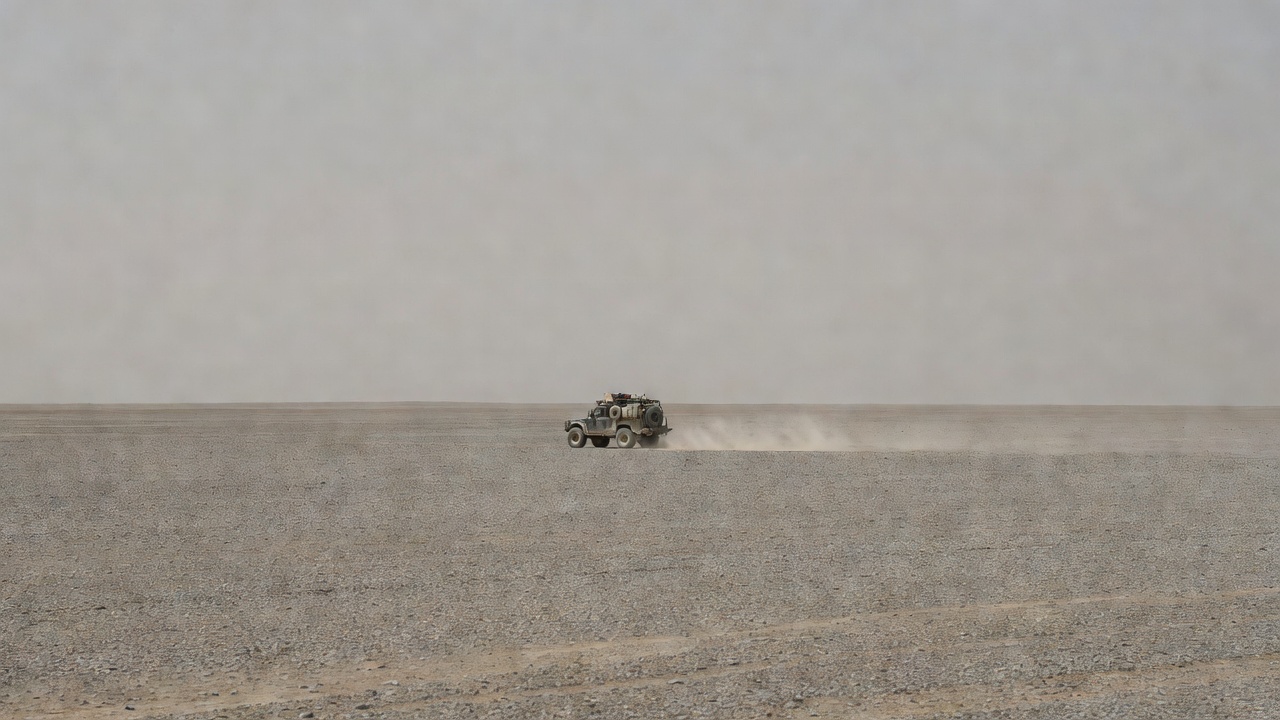
First, decide who drives
The most important preparation decision is whether you should be behind the wheel at all. Driving in deep sand is a learned skill involving momentum, gear choice and reading dune faces you cannot see over. If you have not trained, travel with experienced drivers and treat the journey as a passenger's education. Many protected areas, including the Namib-Naukluft National Park, prohibit driving off designated tracks, and fines are the least of the consequences: tyre scars on gravel plains and lichen fields can remain for decades.
The vehicle
A suitable vehicle is a high-clearance four-wheel drive with low-range gearing, recently serviced, with particular attention to the cooling system, belts and air filter. Carry two full-size spare tyres, not one. Sand gets everywhere, so seal what you can and expect to clean filters often. Load heavy items low and forward of the rear axle, and secure everything: a loose water container becomes dangerous on corrugations.
Tyre pressure
Lowering tyre pressure lengthens the footprint and helps a vehicle float on soft sand. Crews commonly drop to somewhere around 15 to 20 psi depending on vehicle, load and tyre type, and lower still for short recoveries. Lower pressure also raises the risk of rolling a tyre off its rim when turning sharply, so steer gently. Reinflate with a reliable compressor before returning to hard surfaces or tarmac. A good gauge costs little and saves a great deal.
Recovery, calmly
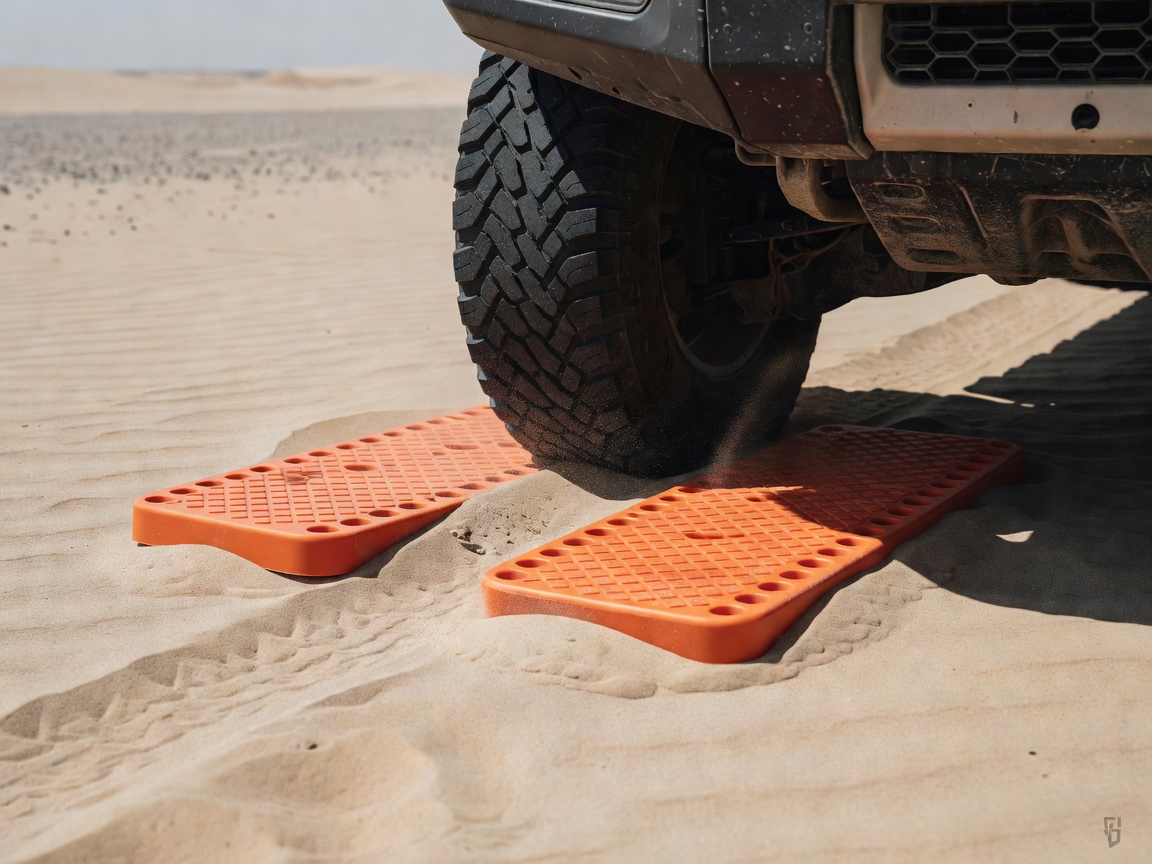
Most recoveries begin with too much speed or too much pressure. Stop as soon as forward progress fades; spinning wheels dig you deeper. Clear sand from in front of the tyres, place recovery boards, and drive out gently. When a strap is needed, use a kinetic strap with rated soft shackles attached only to rated recovery points, never to tow balls. Keep bystanders well clear of the line.
Vehicle readiness inventory
- Service record covering cooling, belts, hoses and filters
- Two full-size spares, tyre plug kit, valve cores
- Jack with a wide sand base plate
- Spare fuses, fan belt, hose clamps and tape
Recovery inventory
- Two pairs of recovery boards
- Long-handled shovel
- Kinetic strap, rated soft shackles, gloves
- Compressor and accurate pressure gauge
Water and fuel inventory
- Minimum 5 litres drinking water per person per day
- Separate cooking and emergency reserve
- Fuel for the planned route plus a substantial margin
- Clearly labelled, sealed containers
Communication inventory
- Satellite messenger or phone, charged daily
- Personal locator beacon registered to you
- Trip plan and check-in schedule with a home contact
- Handheld radios for convoy communication
Personal and medical inventory
- Wide-brimmed hat, long sleeves, high-factor sunscreen
- Electrolyte sachets and a stocked first aid kit
- Warm layers for nights that can fall near freezing
- Head torch and spare batteries
Water and fuel arithmetic
Plan drinking water at no less than five litres per person per day in heat, and more for physical work such as digging. Add water for cooking and a separate reserve you agree not to touch. Fuel consumption in soft sand can be dramatically higher than on roads, so calculate range from conservative figures and carry a generous margin.
| Group | Days | Drinking water (5 L/person/day) | Suggested total with reserve |
|---|---|---|---|
| 2 people | 3 | 30 L | 45 L or more |
| 4 people | 4 | 80 L | 120 L or more |
| 6 people | 5 | 150 L | 225 L or more |
Navigation and communication
Use a GPS unit with offline maps, but carry a paper map and a compass and know how to use them. Tracks drift with the dunes; waypoints from a previous year may lead into soft sand. Before leaving, give a trusted contact your route, your expected check-in times and a clear instruction for what to do if you miss one.
Heat and the body
Drive and walk early. Rest through the middle of the day in real shade. Learn the signs of heat exhaustion: headache, nausea, dizziness, heavy sweating. Confusion or hot, dry skin may indicate heatstroke, a medical emergency. Never travel alone, never leave a stuck vehicle to walk for help in heat unless rescue is certain, and never chase dune faces at speed for the thrill or for a picture.