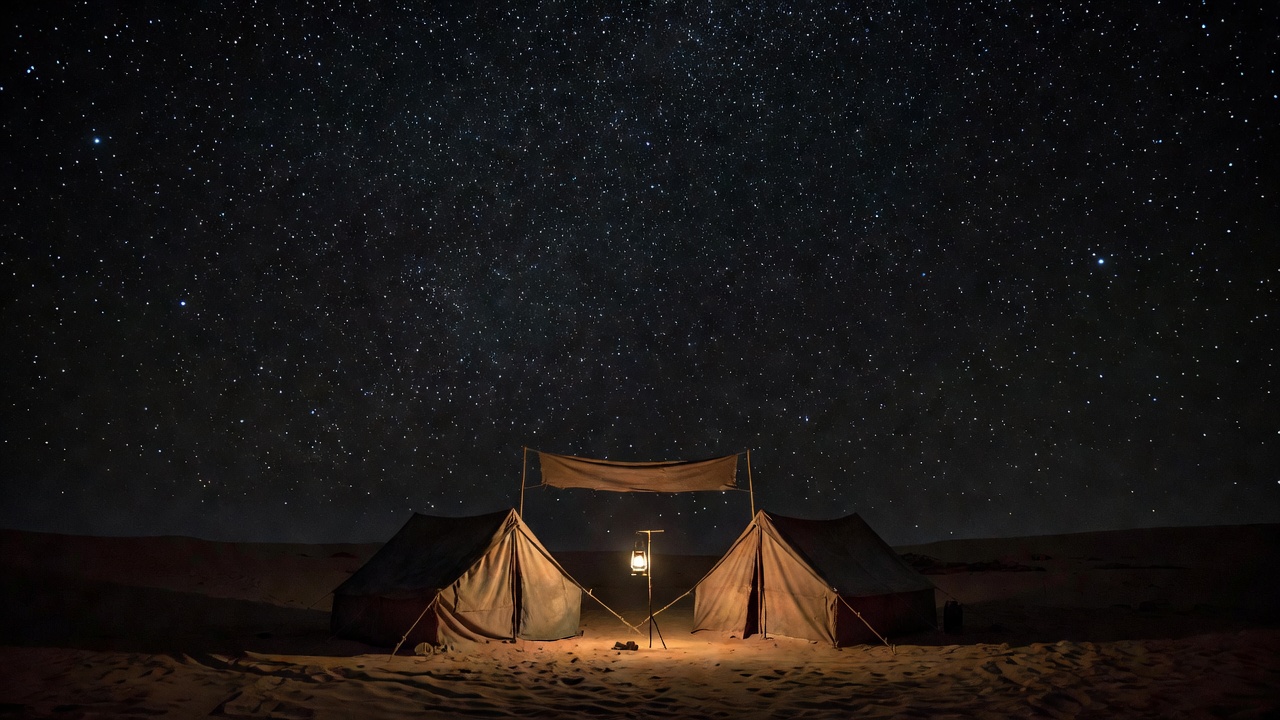
Remoteness as a design brief
Building anything in a desert means working with scarcity. Water must be carried, pumped or harvested. Energy comes mostly from the sun. Waste must be removed or managed with care. Temperature can swing more than twenty degrees between afternoon and pre-dawn. A thoughtful camp or lodge answers each of these limits openly, and the answers shape everything a guest feels, from the thickness of a wall to the brightness of a lamp.
When reading about remote accommodation, look past adjectives. Ask instead how a place handles shade, water, power, waste and darkness. These five questions reveal more about quality than any thread count.
Five concepts, honestly described
Panel 01
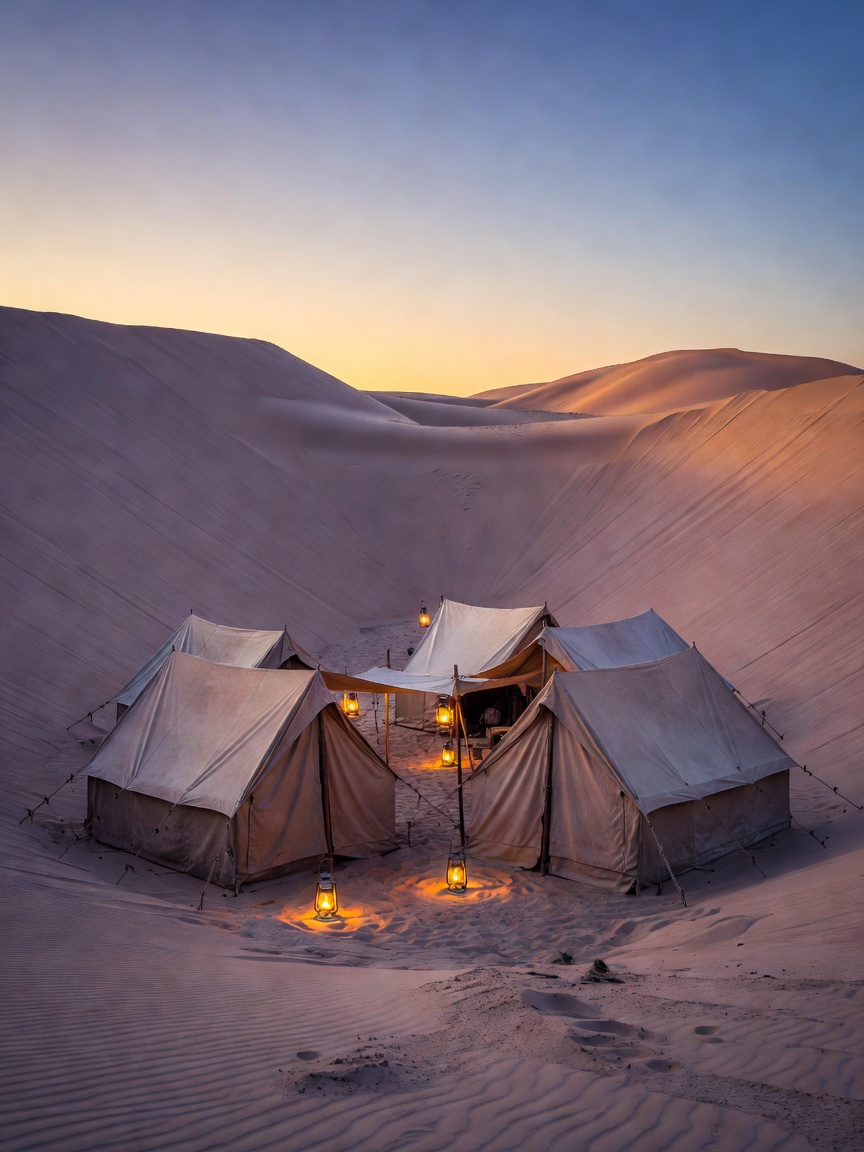
Mobile tented camps
Seasonal camps that move with the weather and leave little behind. Expect proper beds and bucket or gravity showers, but also canvas that flaps in the wind and nights that can be cold.
Panel 02
Fly camps
Bedrolls, a windbreak and no ceiling. The most direct contact with the desert, best on calm, warm nights.
Panel 03
Earth and stone lodges
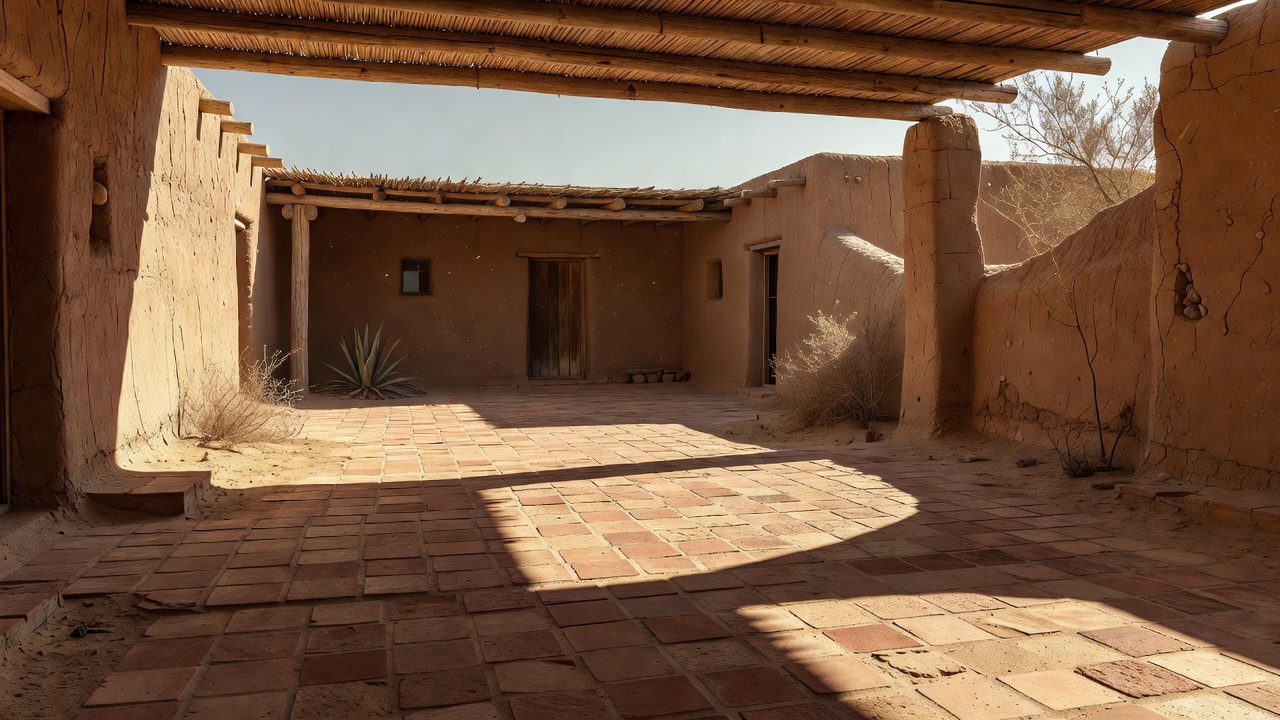
Thick walls and courtyards use thermal mass to stay cool, an approach refined over centuries across the Sahara and Arabia.
Panel 04
Dark-sky stays
Rooms designed around the night sky, often with shielded lighting and open decks.
Panel 05
Clear domes
Transparent shelters for stargazing. Ask how they handle daytime heat; many are uncomfortable without shade.
Design detail
Deep openings, shaded courtyards and cross-ventilation can reduce reliance on mechanical cooling in extreme climates.
Water, energy and waste
In the most careful camps, water use is measured and explained. Showers may be timed or heated by the sun. Grey water may irrigate a small garden or be carried away. Solar arrays charge batteries for lighting and devices, which usually means limited power at night and no hairdryers. Waste is sorted and removed. None of this diminishes a stay; it tells you the operators understand where they are.
The night sky
Darkness is one of the rarest qualities a remote stay can offer. The NamibRand Nature Reserve in Namibia was designated an International Dark Sky Reserve by what is now DarkSky International, and the high, dry air of Chile's Atacama is the reason so many major observatories stand there. Good dark-sky stays use warm, shielded, low lighting and ask guests to keep torches pointed down. If a camp floodlights its paths, the stars will wait for someone else.
Comfort with realistic limits
Remote stays involve trade-offs. Sand reaches everything. Connectivity is limited or deliberately absent. Air conditioning is rare, and in its place you will find shade, timing and thick walls. Nights can be startlingly cold in winter across the Sahara, the Gobi and the high Atacama. Medical help is hours away. Accept these conditions as part of the experience, or choose a stay closer to the edge of the desert.
Questions to ask before you stay
- How is water sourced, and how much is available per guest?
- What power is available at night?
- How is waste removed or treated?
- What is the evacuation plan and nearest medical care?
- How is outdoor lighting managed after dark?
- Are local people employed and fairly paid?
Vornelosafar describes accommodation concepts only. We do not list, rate or book specific properties, and nothing here indicates availability.
Questions remain? Read before the sand.